Current Scientific Name:
Epiplatys guineensis
Described: Romand, 1994
Common name(s):
Some Recorded Strains:
AB
LinksKilli.co.uk is funded by its visitors. When you buy through links on our site we may earn an affiliate commission. For more info see
terms and conditions.
Lakewood, California, 907**, UNITED STATES OF AMERICA
$9
Welcome to Another Nautilus Tropical Fish Auction!
Introducing the Rocket Killifish ?? A Colorful and Active Nano Fish
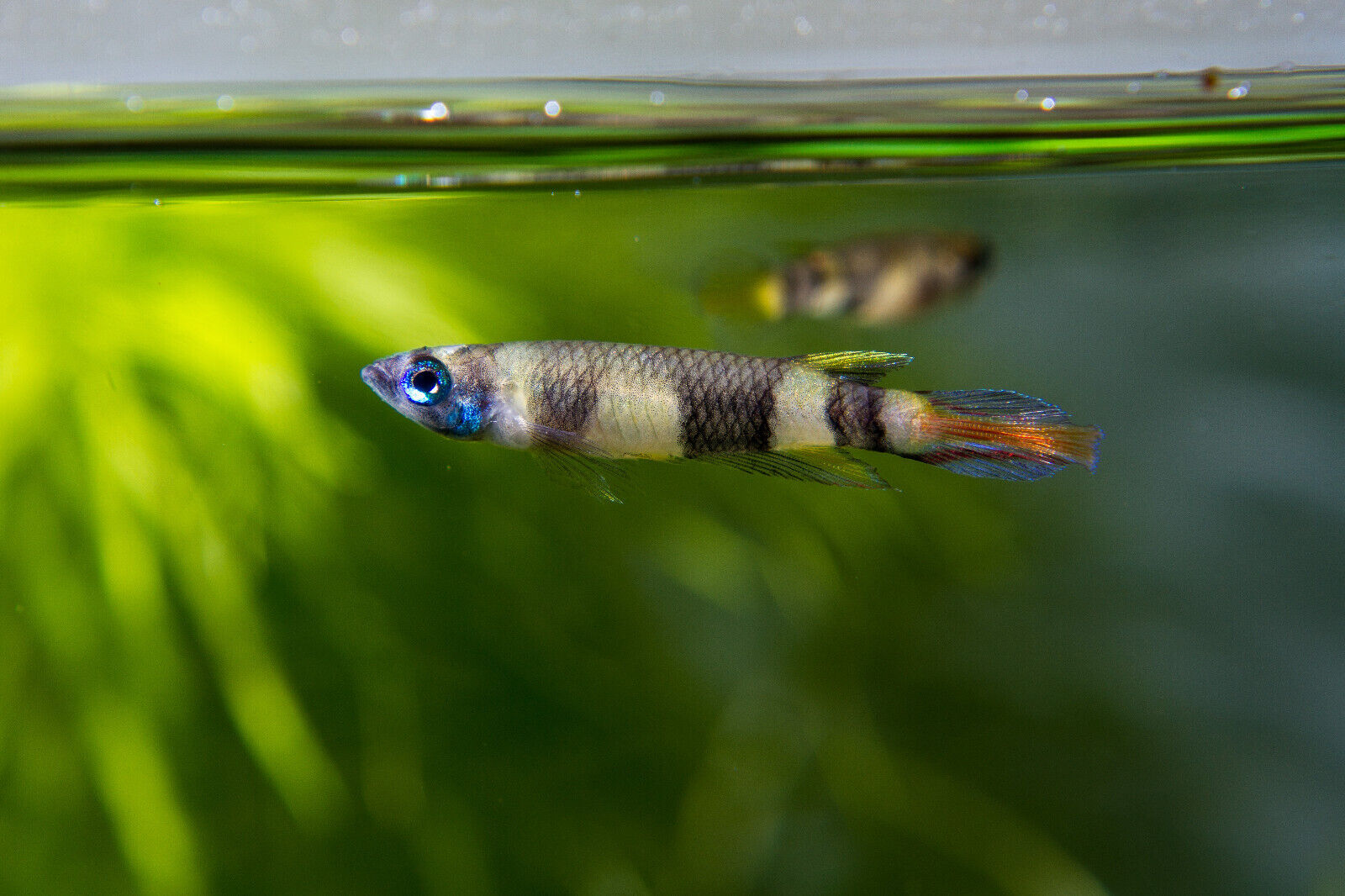
The Rocket Killifish (Epiplatys annulatus), also known as the Clown Killifish, is a stunning and peaceful nano fish perfect for small aquariums. With its vibrant red and blue stripes and rocket-like tail pattern, this species is an eye-catching addition to any tank. These surface-dwelling fish are easy to care for and thrive in planted aquariums
FISH ...
more
Indianapolis, Indiana, 462**, UNITED STATES OF AMERICA
$13
* For the safety of our animals, we now ship live fish exclusively via UPS 1 Day Air If your order contains this item, you will only see UPS 1 Day Air as a shipping option during checkout *
This small killifish boasts incredible coloration, especially in males, and is ideal for the nano or planted aquarium!
WE DO NOT GUARANTEE SPECIFIC SEX ON THESE FISH
The Clown Killifish (Epiplatys annulatus) is an extremely colorful, peaceful fish whose small size makes it absolutely ...
more
Bakersfield, California, 933**, UNITED STATES OF AMERICA
$30
Clown Killifish (Epiplatys annulatus) - 4 FISH
WE DO NOT GUARANTEE SPECIFIC SEX ON THESE FISH
READING IS GOOD FOR YOU, SEE BELOW BEFORE BUYING
Do we combine shipping for multiple orders?We combine the shipping if you have multiple orders. Please message us prior to buying so we can figure out what the final shipping cost will be after you purchase. You will charged the shipping initially for each order, but we will go back and make adjustments / refunds for your order via PAYPAL ...
more Epiplatys guineensis breeding reports
Each record reproduced here represents one instance of breeding this species. Have you kept and bred Epiplatys guineensis? Why not add a breeding report? If you had different results, or used different methods, please share your experiences
How to keep and breed Epiplatys guineensis
This database consists of breeding reports provided by the world killifish community, along with some statistical analysis. Results provided by successful keepers are aggregated in the bar charts below, with more detailed reports below that. Like any block of data, the larger the more significant. Please contribute a report of your attempt to breed Epiplatys guineensis, even if you have had a negative results. You may, of course, file more than one report, particularly if you change some condition, and had a different result.
breeder has filled in a breeding report, a summary of which is shown in the graphs below.
Would Epiplatys guineensis be a good addition to a community tank?
- Never
- Doubtful, only with VERY calm fish
- Only with species of similar size
- Yes, a good community fish
How would you describe the disposition of Epiplatys guineensis?
- Very timid
- Slightly timid
- Neutral
- Somewhat aggressive on occasions
- Very aggressive
In which water conditions do you keep these fish?
- Very soft and acidic
- Moderately soft and acidic
- Neutral
- Moderately hard and alkaline
- Very hard and alkaline
At what average temperature?
- 10-15°C
- 16-19°C
- 20-23°C
- 24-27°C
- 28°C+
How would you describe sex ratios when breeding Epiplatys guineensis?
- Almost all males
- Somewhat male heavy
- Roughly equal
- Somewhat female heavy
- Almost all females
In general, how difficult is Epiplatys guineensis to keep and breed?
- Very easy
- Easy
- Average
- Difficult
- Very difficult
How successful have you been at breeding Epiplatys guineensis?
- Very unsuccessful
- Fairly unsuccessful
- Average
- Fairly successful
- Very successful
Very successful / fairly successful
Breeding Report: Epiplatys guineensisWater conditions: Neutral, 24-27oC
Spawning Method: Spawning Mops
Sex ratio: Somewhat female heavy
Breeding difficulty: Very easy
Success: Very successful
Other Comments: This fish is a biological hazard to any fish room. It can hide indefinately in a medium to large aquarium. It will inject it's eggs into mops meant for other species. Its fry will hatch first, outgrow and kill the other fry. Given beneign neglect, it can take over an entire fish room quickly. The eggs are easily transmitted from tank to tank on plants and such. It can be very attractive or exceptionally bland. It is a remarkable chameleon changing coloration and patterns from minute to minute. Peak coloration usually occurs during feeding or mating. Males are best identified by the yellow margin on the caudal fin. This fish is fast and has keen vision. It is room aware and will hide before you notice it in a fish tank. It is hard to catch and once it infests an aquarium, you can expect to find fry and young long after the parents are removed. It can survive extreme temperature and pH ranges and long periods without food.
Generally this fish is peaceful. Dominant males are agressive to other members of the same species, but will fall short of actually exterminating their same species tank mates. In high density situations they will establish a pecking order. Smaller males will often take on female coloration. This Epiplatys may leave other fish they can't eat alone. It eats flake, frozen or live food of any kind I've tried.
Use extreme care to isolate this species in a fish room or you may very well wind up with only one species left. It may take more than one generation in your fish room to get an individual that will regularly, if ever display peak coloration. In small aquariums, they can become accustomed to one or two people and eventually display well. Generally they will show poorly or hide for guests or in a larger planted aquariums. It has taken me 3 years to reduce this plague to a single reverse trio. They hatched out in an 2.5 gallon fistank sustancially without light, food, filtration or aeration for 6 months. They were only 2.5 cm long and unusually thin. Within 3 weeks of being found and moved to a 5 gallon tank in my office, away from all other fish tanks, the larger male reached 6 cm long. Growth is fast and these are long lived fish. Currently his coloration mimics N. rachovii with a narrow yellow rather wide orange dorsal margin. Thankfully, they do not appear to be spawning. I obtained these fish as part of a package deal for taking 8 fish tanks for free. Now I know why they came with 8 fish tanks.
For those brave enough to actually want to spawn and maintain this species, one would likely suppose they will be impossible. But give a 15 gallon fish tank and large spawining mop a try. If that fails add lots of java moss and remove the parents after a couple of weeks. As a last resort put them in with some new and rare mop spawner. I know for sure that will work.
Good luck, and beware this Epiplatys
Breeder: ~RJ~, USA (4 years experience with this species)
Date this record created: 6th October 2005
Killi.co.uk is funded by its visitors. When you buy through links on our site we may earn an affiliate commission. For more info see
terms and conditions.
Birch Run, Michigan, 484**, UNITED STATES OF AMERICA
$40
15-25 Eggs expect 4-7 day's for orders to be collected
?? Live Arrival GuaranteeWe guarantee all fish will arrive alive and healthy. If you receive a DOA (Dead on Arrival):Contact us within 2 hours of delivery Provide clear photos of the fish inside the sealed bag We??ll evaluate the case and may offer a replacement or partial refund, depending on the situation Note: Guarantee void if no one is present at first delivery attempt ?️ Weather & Shipping RestrictionsShipments may be ...
more
San Diego, California, 921**, UNITED STATES OF AMERICA
$50
Clown Killifish, one of the most striking nano fish available. These fish feature bold red, yellow, and blue markings with a unique ??rocket-like?? shape and calm behavior??perfect for planted and nano aquariums Scientific Name: Epiplatys annulatus
Adult Size: ~ 1??1 5 inches
Temperament: Peaceful
Care Level: Easy
Lifespan: 3??5 years
Tank Level: Top swimmer
Minimum Tank Size: 5??10 gallons (planted preferred)
? Water Parameters
Temperature: 72??78°F ...
more
San Diego, California, 921**, UNITED STATES OF AMERICA
$40
Clown Killifish, one of the most striking nano fish available. These fish feature bold red, yellow, and blue markings with a unique ??rocket-like?? shape and calm behavior??perfect for planted and nano aquariums ? Shipping & Live Arrival Guarantee (DOA Policy)
We take great care in packing and shipping all live fish to ensure they arrive healthy and safely
? Shipping Schedule
All orders are shipped Monday only to avoid delays over the weekend Orders placed after Sunday will ...
more
Maybrook, New York, 125**, UNITED STATES OF AMERICA
$40
1 male approx 1?? and 1 female approx 3 / 4??
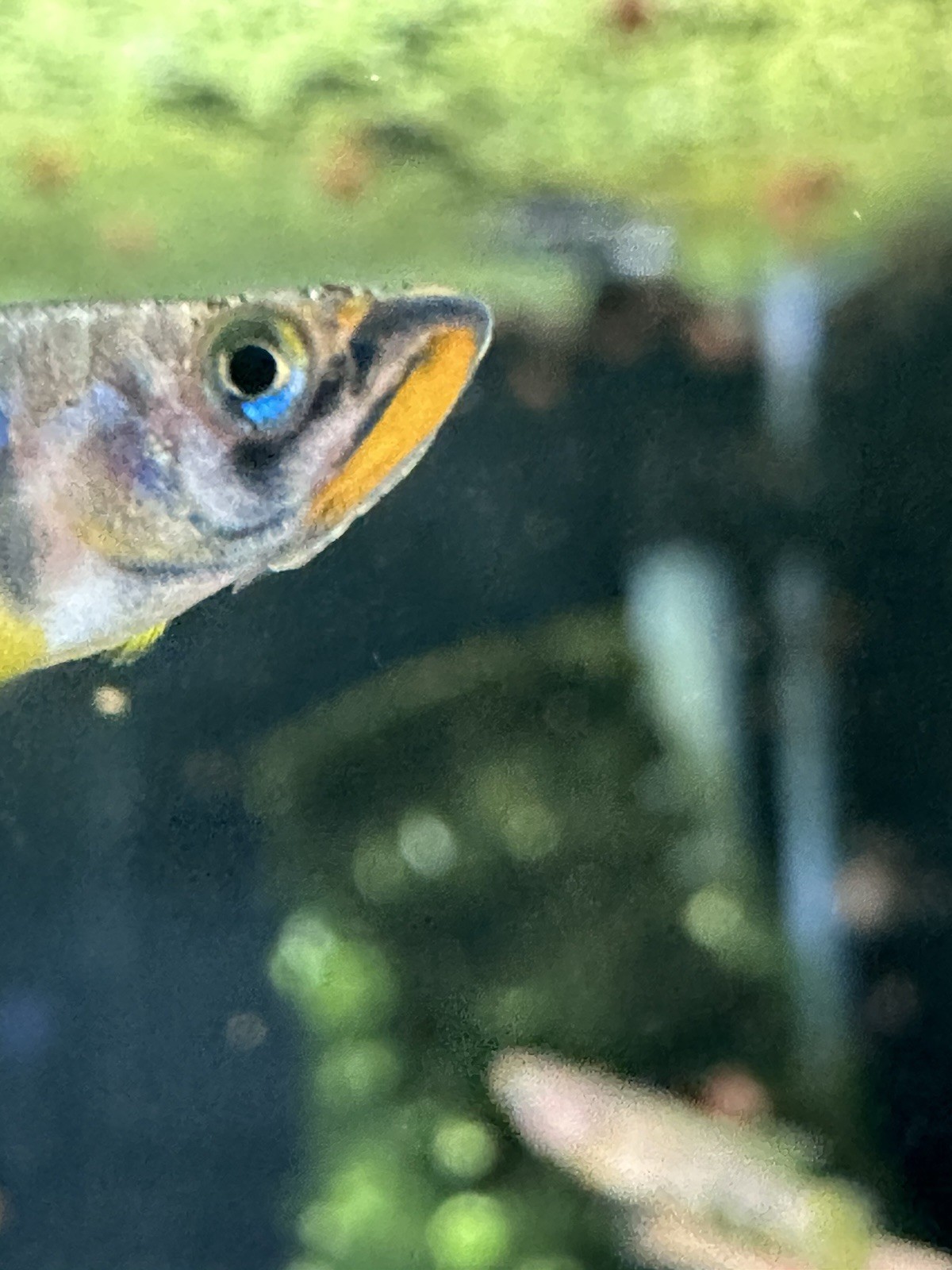
Epiplatys dageti red chin panchax
Bred and Raised in my fishroom in New York. When buying fish bred and raised in small batches you get high quality healthy fish.
Check out my other listings
We ship Mondays
Live Arrival Guarantee:
We are committed to ensuring that your fish arrive safely and in good health. Our live arrival guarantee offers peace of mind...
more
Fond du Lac, Wisconsin, 549**, UNITED STATES OF AMERICA
$45
Pair of Redchin Panchax (Epiplatys dageti) - male and female
these will only ship 2nd day air and will only go out on Monday or Tuesday
DOA - if fish arrive dead within 1 hour of arrival, take photo of unopen bag and send to me, I will refund your order....
more
Indianapolis, Indiana, 462**, UNITED STATES OF AMERICA
$12
* For the safety of our animals, we now ship live fish exclusively via UPS Next Day Air If your order contains this item, you will only see UPS Next Day Air as a shipping option during checkout *
This small fish is very peaceful and ideal for both beginners and experts alike, plus it is an excellent addition to the planted aquarium!
The Norman??s Lampeye Killifish (Poropanchax normani) is a peaceful fish whose small size makes it absolutely perfect for the nano or planted ...
more