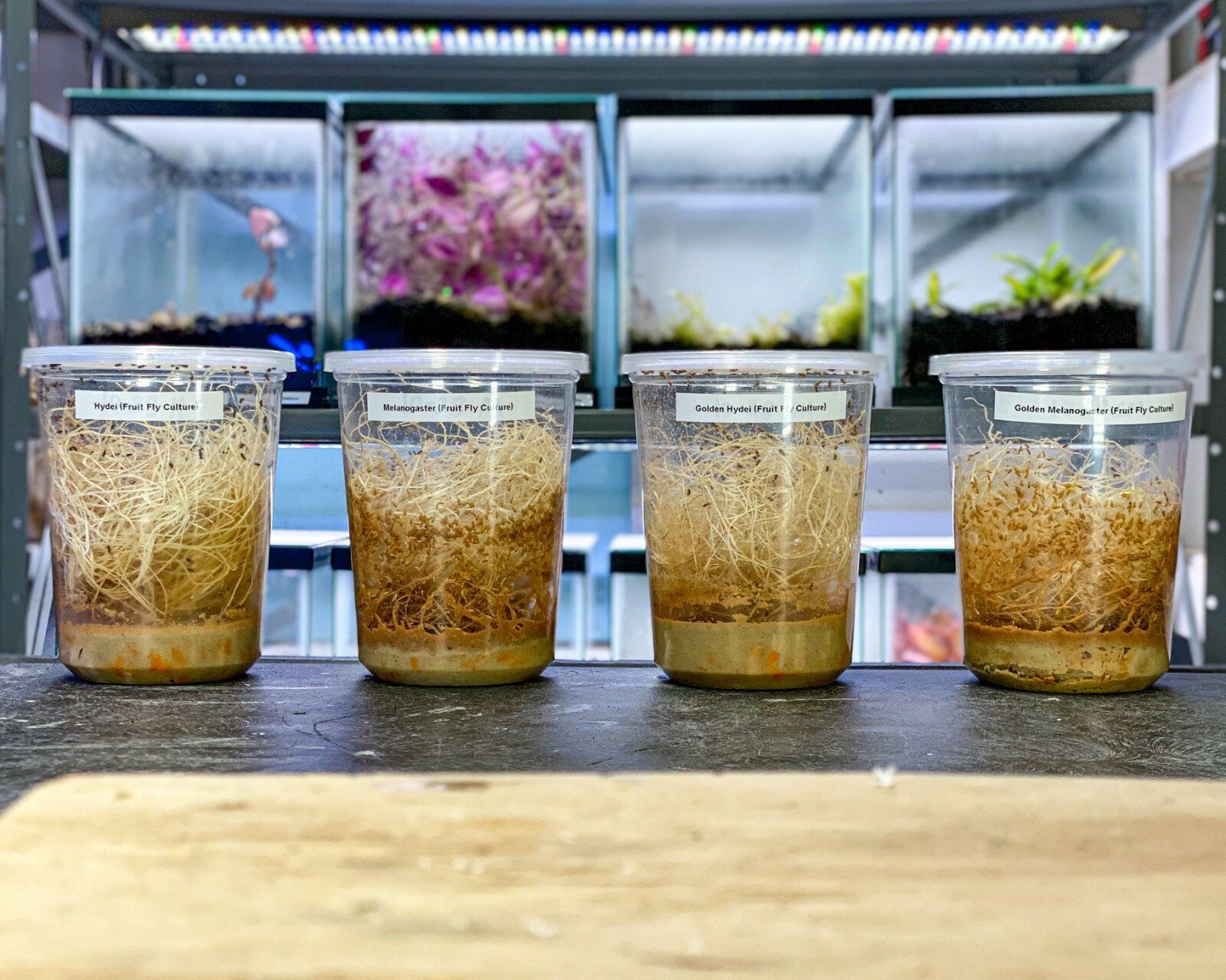
Fruit flies, or Drosophila are an excellent food for most small fish, largely representing the natural killifish diet of invertebrates. Flies are the perfect food for surface dwelling fish species, but even killies from the lower strata, like Nothobranchius can be trained to eat them. Drosophila larvae are also a good food for killies, and although rarely a 'favourite' food, are an easy source of small food when worms are not available.
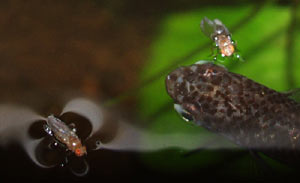
A Rivulus xiphidius eyes up a fruit fly
Feeding fruit fly larvae to killifish
Larvae of any size can be fed to killies to suit their needs. Lots of larvae can be scraped from the sides of their vial, and if a drip of water is added , the rest will make their way out of the media and up the sides. After this you can leave the remaining larvae to hatch turn into flies, or to be really thorough you can add the contents of the vial to a strong (3M) salt solution. The food dissolves away or sinks and the larvae will float, allowing them to be scooped out with a net, rinsed and fed. It is crucial not to over feed with Drosophila larvae, as they drown very quickly (1 hour or less) and although fish do eat them, they do not eat them with the same relish that they enjoy other insect larvae.
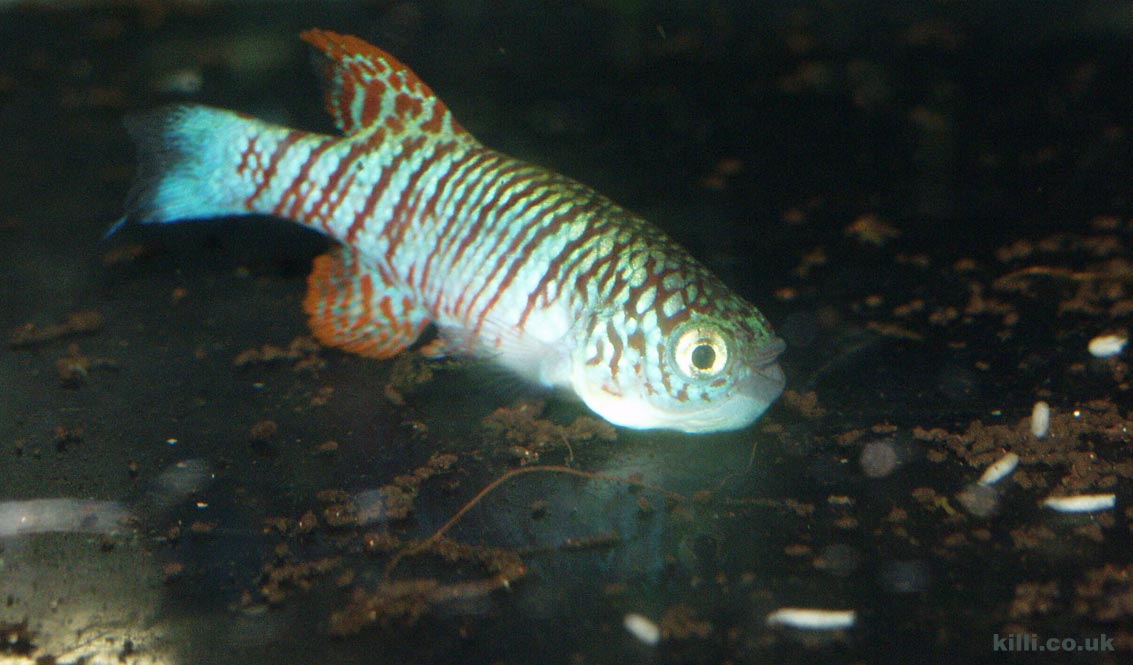
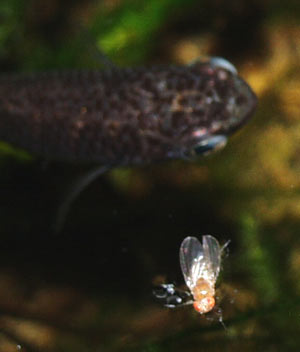
Cute fish look evil from above
Feeding with flies
Simple throw them in! The flies float on the surface, sometimes in clumps. If they can get to the sides they will climb out. Feeding fish with fruit flies is easy when the fish are hungry and waiting, however some will always escape. Surface feeders, such as Epiplatys will devour them quickly, however other species need to be trained, not so much to eat them, but to notice that they are there! Unless your fish are mad for fruit flies, only feed a few at a time! Again, 5-8 minutes in a freezer can immobilise flies for some time, but they do wake up after a few seconds in warm tank water.
Fruit fly cultures for sale
Killi.co.uk is funded by its visitors. When you buy through links on our site we may earn an affiliate commission. For more info see
terms and conditions.
Dover, Pennsylvania, 173**, UNITED STATES OF AMERICA
$65
This 4 pack of Gokden Fruit Fly cultures + 4 Pack of Hydei is the perfect addition to any reptile or dart frog owner's collection. These cultures provide a nutritious and tasty food source for your pets without the hassle of dealing with live insects. The flies are easy to maintain and will last for several weeks, ensuring that your pets are well-fed and healthy.
With free shipping included, this is a great deal that you don't want to miss out on. Whether you're a seasoned reptile owner or a...
more
Huntsville, Texas, 773**, UNITED STATES OF AMERICA
$38
Give your animals more feeder variety with this convenient 5 Species Fruit Fly Combo. This bundle includes a great mix of popular fruit fly cultures, making it an excellent choice for hobbyists, breeders, and keepers who want multiple feeder options in one order
With a range of sizes and varieties, this combo is ideal for feeding dart frogs, small reptiles, amphibians, slings, and other insect-eating pets that do best with smaller live feeders
Culture Types Included in This ...
more
Lyndhurst, New Jersey, 070**, UNITED STATES OF AMERICA
$13
Melanogaster Fresh Fruit Fly Cultures and they are an ideal food for Poison Dart Frogs, fish, Praying Mantids, young frogs and toads, and other reptiles, amphibians, or captive animals that require small foods....
more
Cleveland, Georgia, 305**, UNITED STATES OF AMERICA
$100
??PLEASE READ BEFORE PURCHASING??
(WHAT YOU RECEIVE)
-------------------------------------------------------------------------------------
Name: "Golden" Drosophila melanogaster / "Golden" Drosophila hydei
Drosophila melanogaster / Drosophila hydei
(x4 CULTURES)
Sizes: Flies, Larva & Eggs
Count: 50+ Per Culture (will produce prolifically)
Sex: M / F
WITH EXTREME TEMPS THERE WILL ...
more
Huntsville, Texas, 773**, UNITED STATES OF AMERICA
$37
Fruit Fly Combo | 4 Species Hydei, Melanogaster, Golden and Normal morphs
Keep a reliable mix of popular feeder flies on hand with this convenient Fruit Fly Combo. This bundle includes 4 different species and varieties, giving hobbyists and breeders a practical range of feeder sizes for reptiles, amphibians, dart frogs, slings, and other small insectivores
Whether you are feeding a growing collection or maintaining multiple cultures at once, this combo is a great way to add variety and ...
more